17 December 2024
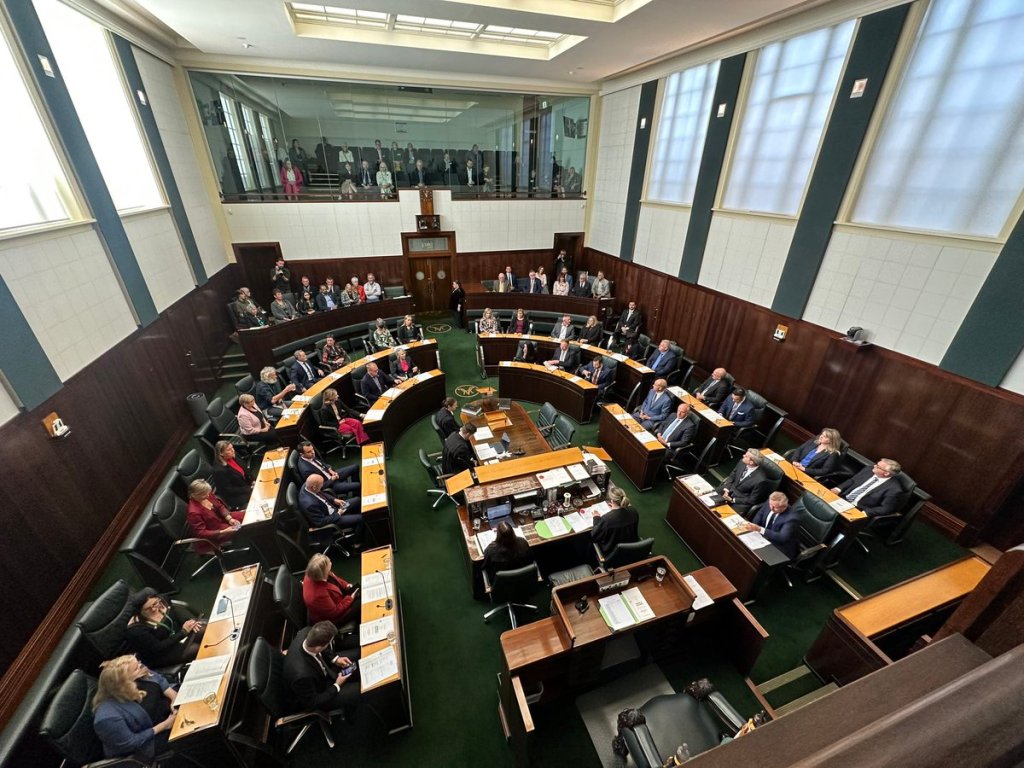
It’s been a tumultuous time for the Tasmanian minority Liberal government but a great one for the parliament. Parliament’s roles include keeping the executive to account and passing legislation and on both counts Tasmania’s 51st parliament has succeeded. The same cannot be said for the government and opposition.
Debacle
The government oversaw Australia’s biggest infrastructure debacle, a huge budget deficit and a health crisis. And in the intangible, yet important, policy area of accountability, democracy and transparency, the government’s commitment and performance continued to be questionable.
Forty percent of Right to Information responses do not comply with the legally-required 20-day response time. The Integrity Commission is the most under-funded in the country, under-staffed and had no in-house counsel. Those words were from the Chief Commissioner, Greg Melick in the commission’s annual report.
Not much difference
The Labor party opposition is in name only. The major parties have few policy differences; most disagreements are about implementation, not goals. But the party swung a few punches that landed. Industrial manslaughter bill became law and leader Dean Winter kept the heat on the government TT-Line/Tas Ports infrastructure debacle. His relentless probing and revelations in Question Time contributed to the resignation of Deputy Premier and former Infrastructure Minister Michael Ferguson.
Parliament is working
A debacle was what the major parties wanted us to believe the parliament would be if there was not a majority government. But as independent Kristie Johnston opined in The Mercury, the facts show the prediction didn’t eventuate. Members worked together to pass bills such as Ms Johnston’s bill to make easier for family violence orders to be extended. The House passed it unanimously.
It also passed the Greens’ political party donations bill which strengthened democracy. Promised by the Liberals after the 2018 election, its bill passed both chambers last year after Labor reversed its decision not to support key elements, including the limit on donations to be declared. The Greens’ bill, supported by the major parties in the House of Assembly, will supersede the Liberals’ legislation and so the Legislative Council will pass them.
Most influential
While we’re on the subject of parliament, the Liberal-leaning Font Public Relations company’s podcast, Fontcast, awarded David O’Byrne its annual Golden Font. The award is for having the most influence on state politics, judged by the podcast crew. Mr O’Byrne won 10 votes, Dean Winter seven and Jeremy Rockliff five. The Font crew declared O’Byrne was the most influential crossbencher and had – among other things –been instrumental in causing the resignation of former deputy premier and treasurer Michael Ferguson.
Mr Ferguson’s resignation was on the eve of parliament meeting that would consider a no-confidence motion in the Deputy Premier that was certain to succeed, so it is unlikely he would’ve resigned if the government had a majority. It was an example of the parliament working as it was intended: to hold the executive to account.
More accountability
If there was a majority government the House of Assembly Standing Orders wouldn’t have been changed to:
- Disallow Dorothy Dix questions – those asked by government members of ministers which gives them a propaganda opportunity.
- A one-minute limit on questions
- A three-minute limit on answers.
- One supplementary (follow-up) question of 30 seconds and one-minute answer.
Speaker Michelle O’Byrne’s adherence to the rules is strict that ensures more questions can be asked, Ministers are held to account by the tight time rules and the supplementary question usually asked if the Minister has not answered the question.
Speaker O’Byrne, a Labor member for Bass, has brought authority and at times levity, when appropriate, to her role.
Reasons for optimism
The leaders of both major parties warned during the election campaign of the dangers of a hung parliament. Premier Jeremy Rockliff said it would result in a “coalition of chaos”. There are fears the parliament will not last its four-year term. And yes, we’re just nine months in, but the past two parliaments, one of which had a majority government, did not last the distance because Liberal premiers Gutwein and Rockliff, respectively, called early elections.
There’s one underlying reason the parliament will last its term: realpolitik. The word, coined by 19th century German writer and politician Ludwig von Rochau, refers to the practice of politics-based circumstances and factors, rather than ideological, moral, or ethical reasons. The circumstances and factors in Tasmania today are that no one wants an election. No politician wants to be held responsible for causing it, which is why Labor abandoned support for a no-confidence motion.
 Tasmanian Constitution Society
Leave a comment